
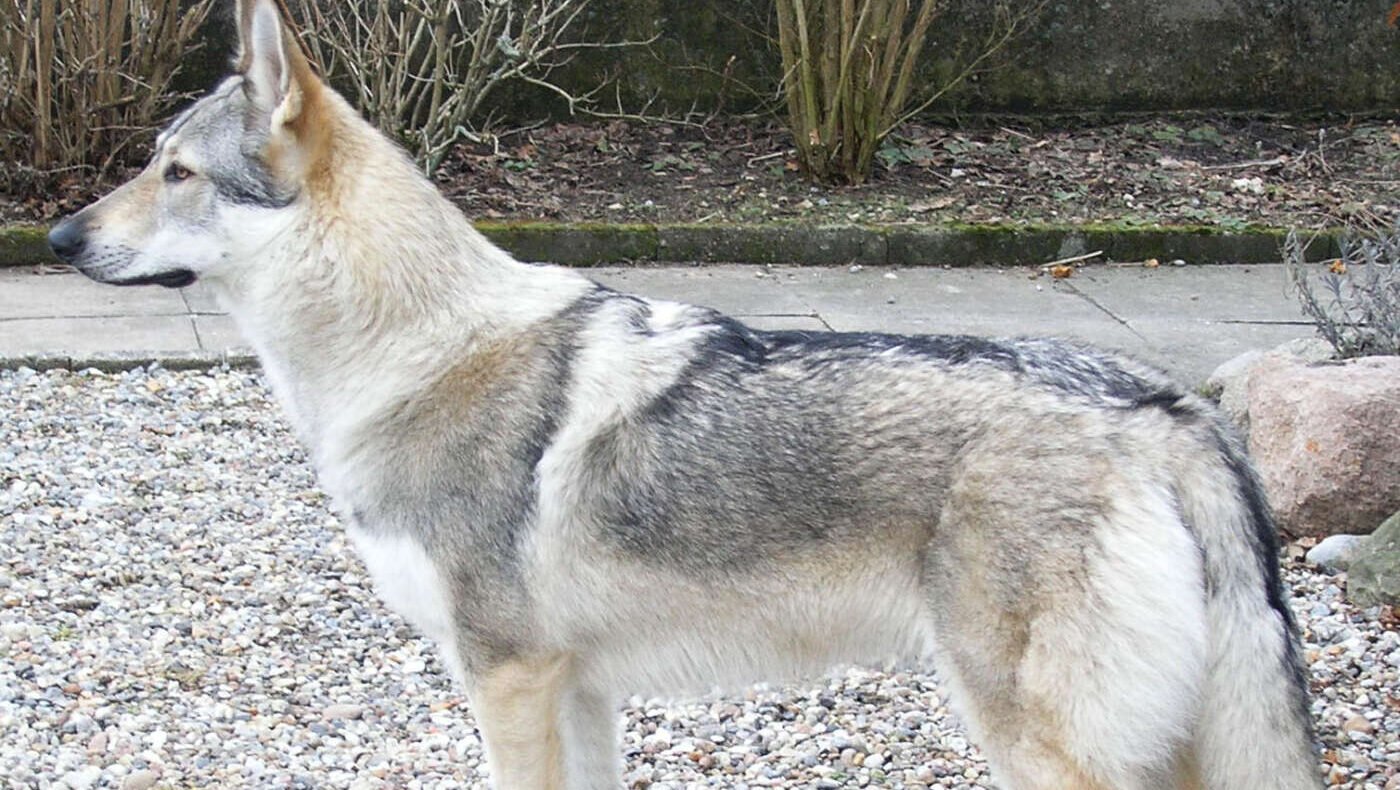
Every so often a photo goes round of a huge, grey, pricked-eared dog standing in a misty field, and the comments fill up with the same question: is that a wolf? A werewolf looking dog has a particular kind of pull. The thick ruff, the long legs, the stare that seems to follow you across a room – it all feels a bit like a creature from a horror film, only with a lead attached. The good news is that you do not need a full moon, or a wolf, to get the look. Several domestic breeds have it naturally, and a couple were bred specifically to resemble their wild cousins.
This guide runs through the best-known wolf-like dog breeds, where they come from, and what living with one is really like. Because the honest truth is that a dog that looks like it could howl at the moon often comes with a big appetite for exercise, a very thick coat and a mind of its own.
What makes a werewolf looking dog?
When people search for a werewolf looking dog, they are usually describing a handful of features rather than one particular breed. Think of a deep chest, a dense double coat that stands out around the neck, upright triangular ears, a long muzzle and a lean, athletic build. Grey, silver and sandy coats add to the effect, as do darker markings across the face.
Most of these dogs belong to the spitz family or have northern working roots, which explains the thick fur and the pricked ears. Dogs of this type were developed to cope with bitter cold and to cover long distances, so the wolf-like silhouette is partly a result of function. A coat that keeps out the Arctic wind is going to look chunky and dramatic whether the dog is pulling a sled or lying on your sofa.
It is worth stressing that looking like a wolf is not the same as behaving like one. Domestic dogs have been bred over many generations to live alongside people, and even the most dramatic-looking breeds are still dogs. That said, the breeds below are not ideal for every home, and a bit of research goes a long way.
Alaskan Malamute: the heavyweight of the wolf look
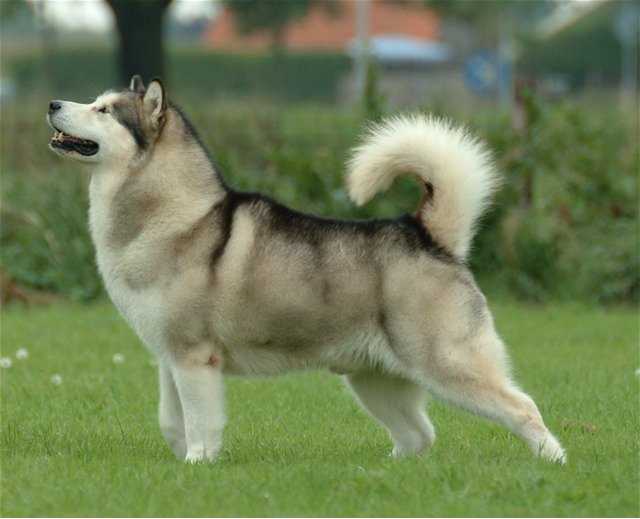
Alaskan Malamute. Photo: SCMW, CC BY 3.0, via Wikimedia Commons
If you want size, the Alaskan Malamute is the obvious starting point. According to the American Kennel Club, it is one of the oldest Arctic breeds, historically used to haul heavy sleds, and adults can weigh nearly as much as a grey wolf. The thick grey-and-white double coat does much of the work when it comes to the wolf impression.
The Royal Kennel Club notes that the breed takes its name from the Mahlemut tribe, a group of nomadic Inuit people who developed it to haul heavy loads over long distances, and describes it as the strongest of the sled dogs. It lists the Malamute as a large dog that needs more than two hours of exercise a day, daily grooming and plenty of space, ideally a large house with a large garden in the country. They are strong, affectionate and loyal, but they shed heavily, especially when the seasons change, so be ready for fur on absolutely everything.
Siberian Husky: the classic wolf-like dog
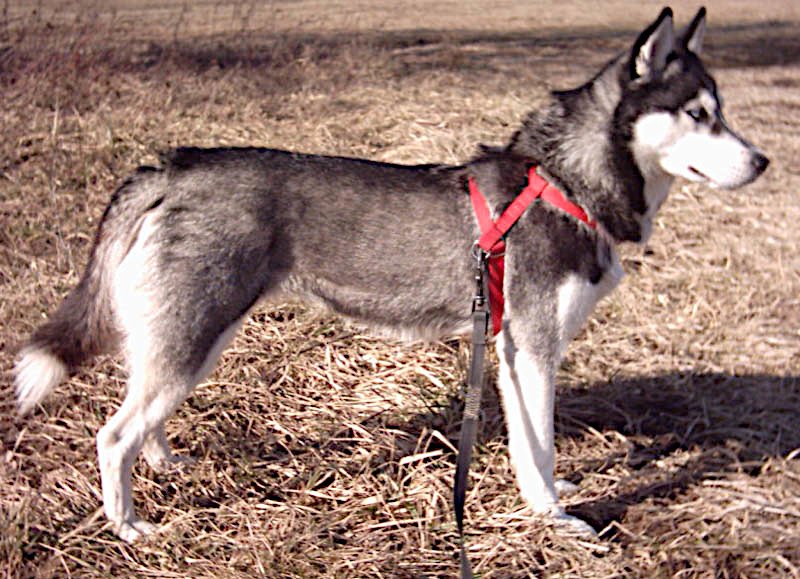
Siberian Husky. Photo: xJaM, CC BY-SA 3.0, via Wikimedia Commons
The Siberian Husky is probably the first breed most people think of when they picture a wolf-like dog. It comes from north-east Siberia, and the Royal Kennel Club describes it as the lightest and fastest of the sled dogs. The breed was also known as the Chukchi sled dog, after the people of the region who used these dogs to haul sleds over long distances.
Huskies are medium to large, with a thick coat that sheds, and they need more than two hours of exercise a day. The American Kennel Club points out that they are friendly and outgoing, but also have a strong instinct to roam, can be vocal and are best suited to active households. Anyone who has heard a husky “talk” will know why the werewolf comparison keeps coming up. If you want a dog that can hold a full conversation at 6am, this is your breed.
Czechoslovakian Vlciak: the closest thing to the real deal
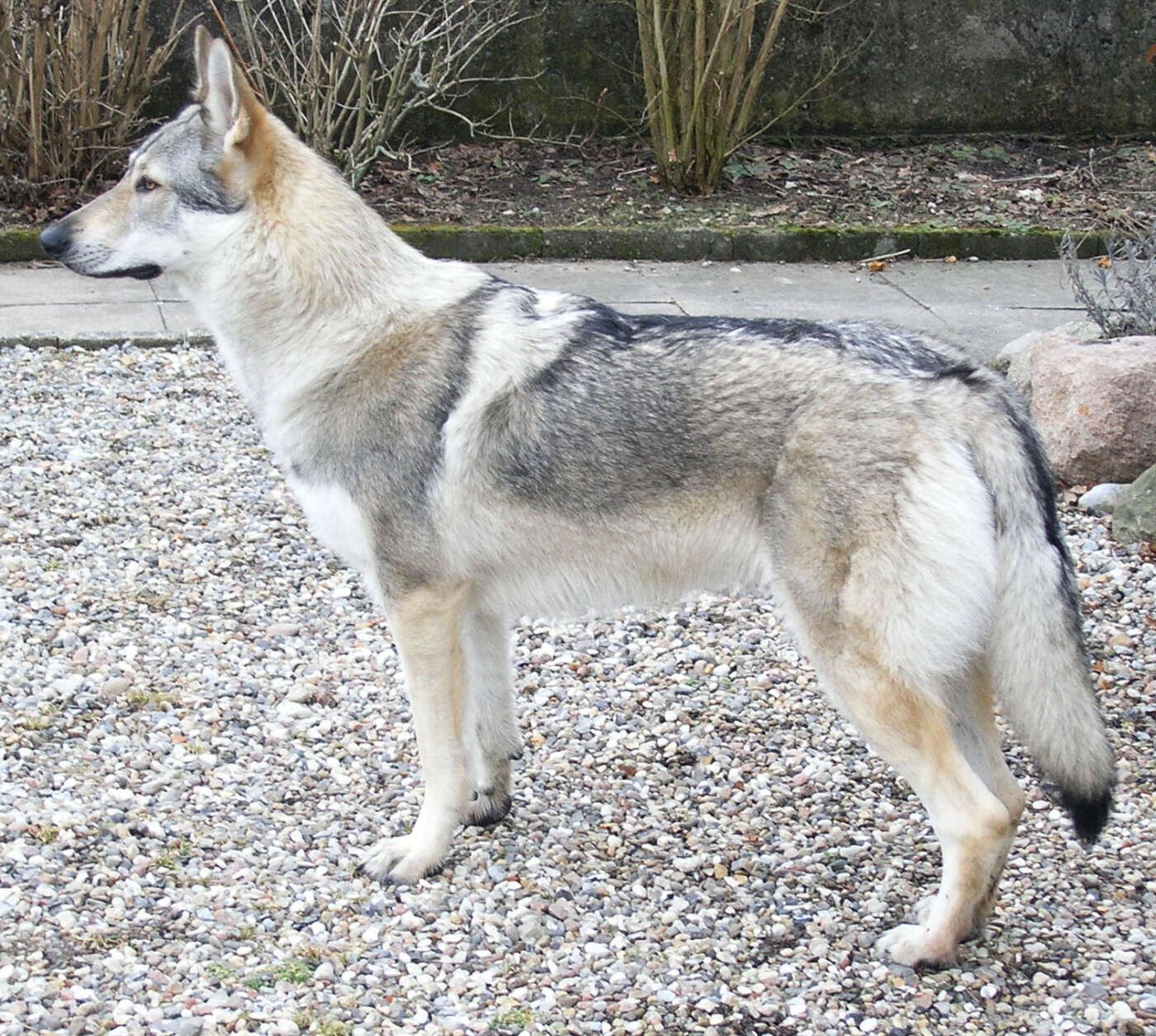
Czechoslovakian Vlciak. Photo: Pandora666, CC BY-SA 3.0, via Wikimedia Commons
The Czechoslovakian Vlciak, sometimes called the Czechoslovakian wolfdog, has the most unusual backstory on the list. The American Kennel Club says the breed was developed in the 1950s by crossing German Shepherd Dogs with Carpathian wolves, and that it was originally used for military border patrol. Today it is a recognised breed in the Miscellaneous Class in the United States.
The look is exactly what you would expect: a lean, athletic dog that really does resemble a wolf. The temperament, though, is not for the faint-hearted. The breed is described as intelligent, athletic and fiercely loyal, but also independent and reserved with strangers. It is prone to boredom without extensive exercise and enrichment, and it is not considered a good fit for first-time owners. If you are drawn to the werewolf look, this is a breed to admire from a safe distance before committing.
Tamaskan: a wolf lookalike by design
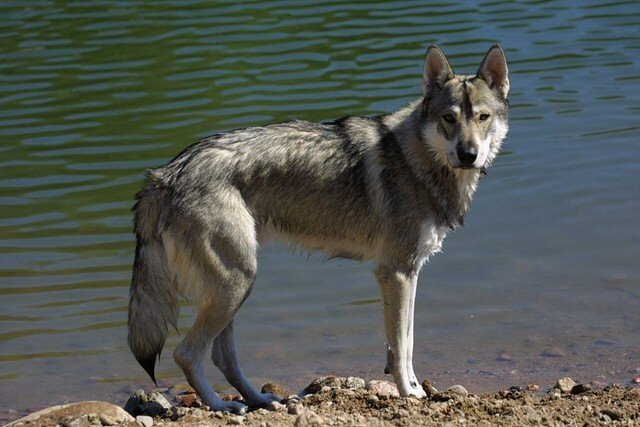
Tamaskan. Photo: Allison Laing, public domain, via Wikimedia Commons
The Tamaskan is the breed that most directly answers the “I want a werewolf looking dog” request, because it was created to look like a wolf. According to Wikipedia, the breed grew out of a project in the United Kingdom in the 1980s to produce wolf-like dogs, and the founders later added working husky crosses from Finland to their lines. The Tamaskan Dog Register was started in 2006.
The breed is built from domestic dog crosses, including Alaskan huskies, Alaskan Malamutes, Siberian huskies and German Shepherds, rather than from wolves themselves. It is described as slightly taller than a German Shepherd, bigger than a typical sled dog and smaller than an Alaskan Malamute. It is not recognised by the FCI, the international federation that oversees many national kennel clubs, although it is recognised by the American Rare Breed Association.
German Shepherd: the everyday wolf look
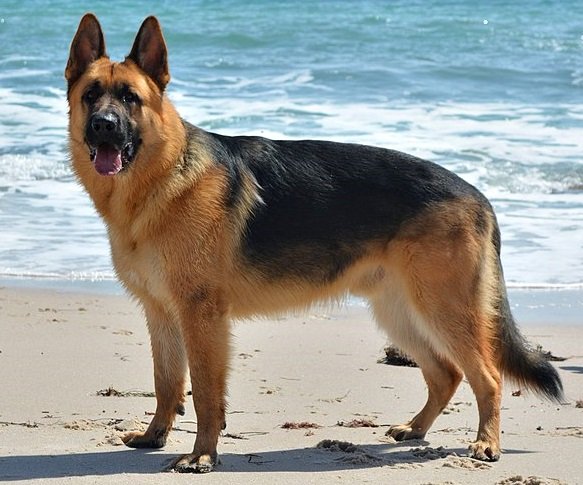
German Shepherd. Photo: gomagoti, CC BY-SA 2.5, via Wikimedia Commons
The German Shepherd does not usually top the lists of werewolf looking dogs, but side by side with a wolf the resemblance is hard to miss. The Royal Kennel Club describes it as a versatile worker and service dog noted for bravery and intelligence. It is a large dog that comes in short and long coat varieties, sheds, needs grooming more than once a week and needs more than two hours of exercise a day.
Its role in the wider wolf-like family is worth noting, too. As mentioned above, the German Shepherd was used to create the Czechoslovakian Vlciak and also appears in the Tamaskan’s mix, so it quietly sits behind several of the most dramatic wolf-looking breeds.
Samoyed, Norwegian Elkhound and other wolf-like breeds
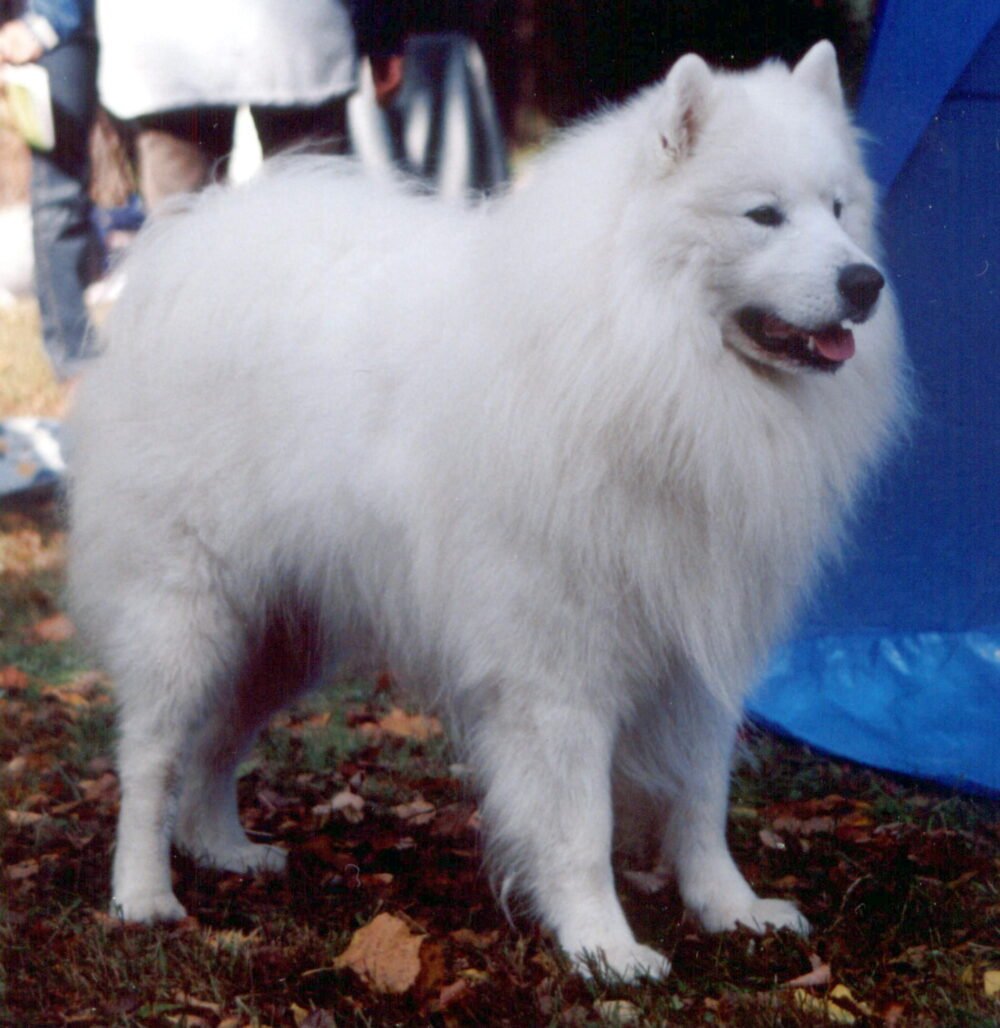
Samoyed. Photo: Pleple2000, CC BY-SA 3.0, via Wikimedia Commons
Not every dog with the wolf look is grey and brooding. The Samoyed has a fluffy white coat and a famously sociable nature. The American Kennel Club describes it as cheerful, intelligent and full of stamina, but it thrives on company, and long periods alone can lead to separation-related problems. It is a gentler take on the Arctic look.
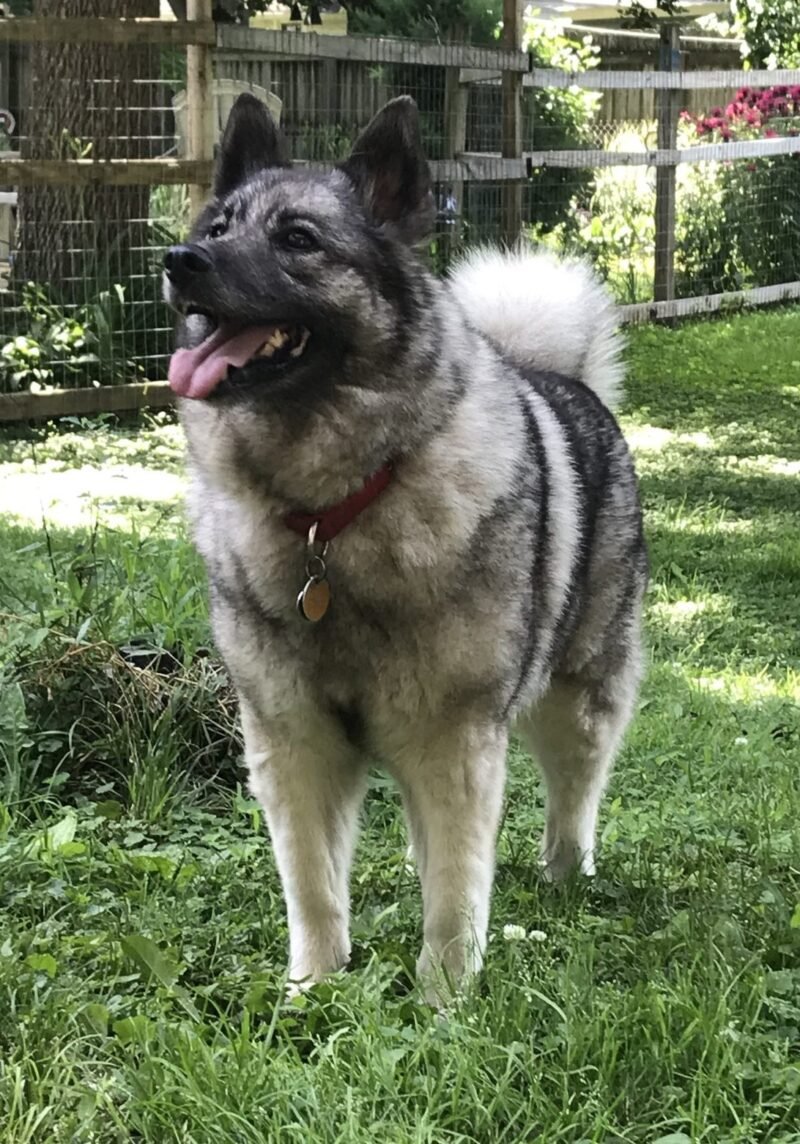
Norwegian Elkhound. Photo: HawkNightingale175, CC BY 4.0, via Wikimedia Commons
The Norwegian Elkhound is closer to the classic grey wolf colouring. It is an ancient Nordic spitz breed, used for hunting and herding and said to have accompanied the Vikings. It has a dense silver-grey coat that sheds heavily in season, is devoted to its family and is reserved with unfamiliar people. Its independence and strong prey drive mean training takes patience.
For something smaller, the Alaskan Klee Kai was developed in the 1970s as a companion-sized version of the Alaskan Husky and comes in toy, miniature and standard sizes. It has a wolf-like “woo” to match the look, and it is described as more trainable than a husky, though it is still vocal.
Are wolf-like dogs right for you?
Before you fall for a werewolf looking dog, think about daily life rather than photos. Most of the breeds above need well over an hour of proper exercise every day, and the northern breeds in particular want space, mental stimulation and a firm but kind approach to training. A bored husky or malamute can be seriously destructive, and a dog with strong roaming instincts needs a very secure garden.
The coat is another thing to plan around. A double coat that looks spectacular on an Arctic hillside means serious moulting at home, so expect regular brushing and a vacuum cleaner that gets plenty of use. Hot weather can also be hard going for thick-coated breeds, so summer walks need care.
If you are looking for a wolf-like dog, speak to reputable breed clubs and rescue organisations rather than buying on looks alone. A breed’s needs matter far more than its looks, so choose the one that matches your lifestyle, not just the one that looks the part.
Our verdict on the werewolf looking dog
The appeal of a werewolf looking dog is easy to understand. From the massive Alaskan Malamute to the wolf lookalike Tamaskan and the wolf-descended Czechoslovakian Vlciak, these breeds bring a touch of the wild to everyday life. Just remember that the real star of the show is the personality underneath the fur, and that personality needs a lot of exercise, training and love.
If wild animals are more your thing, take a look at our piece on big cats in the UK. And if the werewolf theme has got you in the mood for something spookier, see where to watch Wolf Man for free or browse our list of the best horror Netflix shows.