
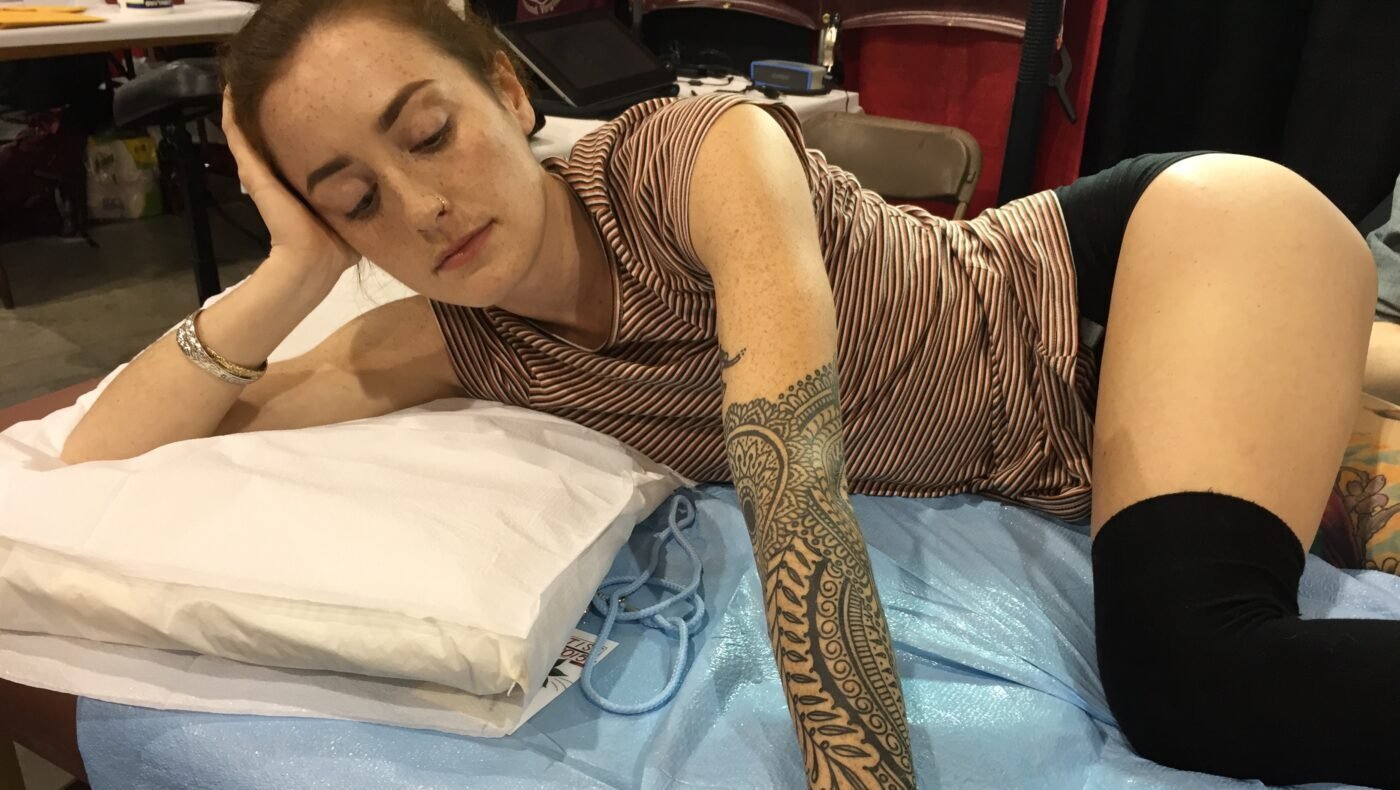
Few body art choices are as popular as a tattoo on arm men go for, and it is easy to see why. The arm is visible when you want it to be, easy to cover when you do not, and offers a surprising range of shapes to work with. Whether you are planning a small first piece or a full sleeve, the placement shapes everything that follows: the design, the way it ages, how it feels to get and how much care it needs afterwards.
This guide walks through the main areas of the arm, how to choose a design that suits the space, the legal and safety basics in the UK, and how to look after the result. It is written for anyone weighing up their first piece or adding to existing work.
Why a tattoo on the arm suits so many men
The arm is a forgiving canvas. It is one of the larger, flatter areas of the body, which gives an artist room to build detail without the distortion that comes with tighter curves. It is also practical. A short-sleeved shirt shows the forearm, while a long-sleeved one hides the lot, which matters if your job or family circumstances call for a more discreet approach.
Because the arm sits in plain view, the work gets seen and talked about. That is part of the appeal for many people, and it is also why the design and the quality of the line work deserve careful thought. Public figures and online creators regularly show their ink off, and we have looked at examples before, including Mily Moon showing off new tattoos and the heavily tattooed look of Twitch streamer luucifina. Seeing how different styles sit on different bodies is a useful way to work out what you do and do not like.
Forearm tattoo ideas for men
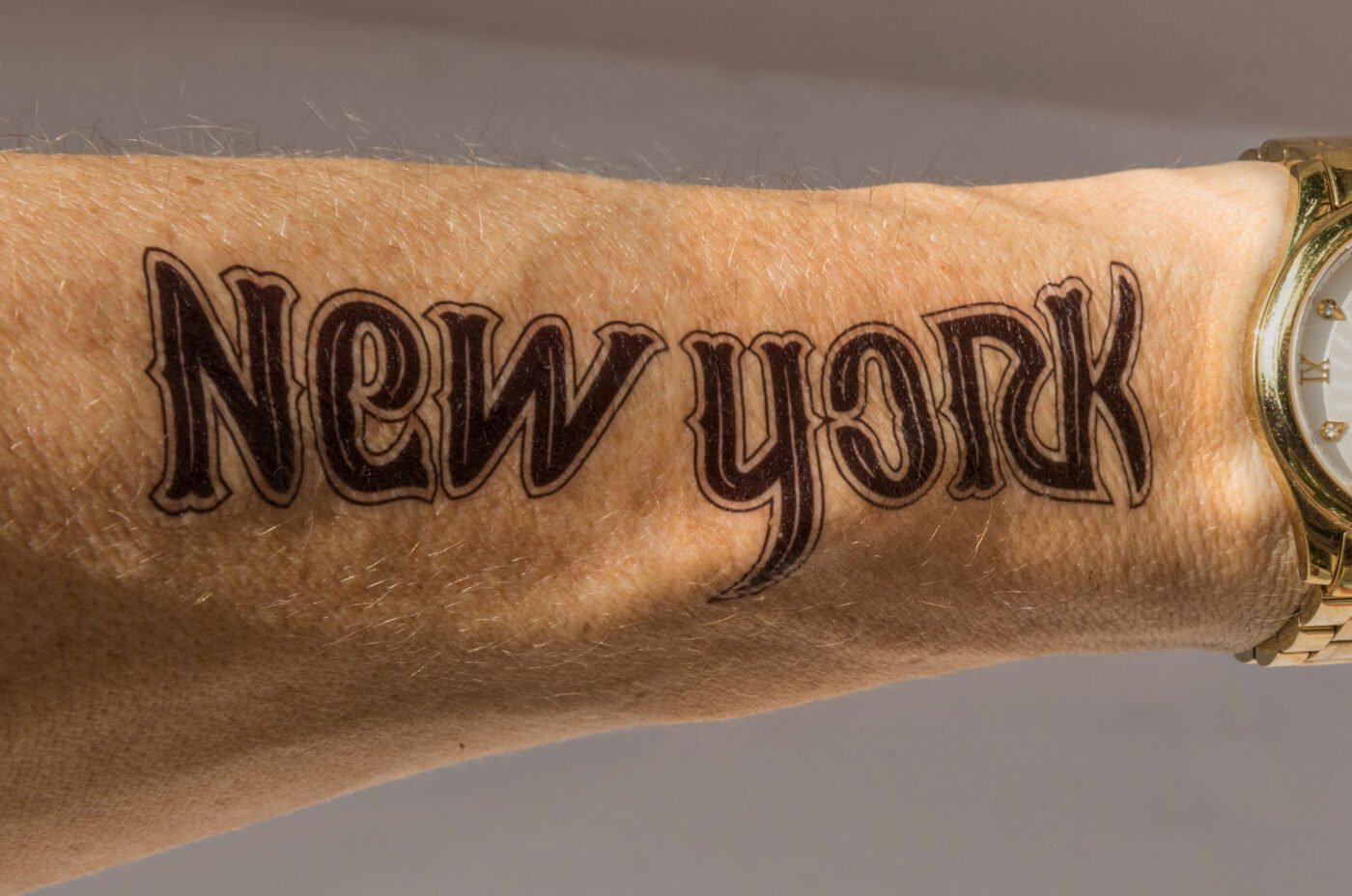
An ambigram lettering tattoo. Photo: Basile Morin, CC BY-SA 4.0, via Wikimedia Commons
The forearm is the most common starting point, and for good reason. It is easy to see while the tattoo is being done, which many first-timers find reassuring, and the long, slightly tapered shape suits designs that run along the arm rather than across it. Lettering, compasses, anchors, animals, geometric patterns and botanical drawings all work well here.
Some practical points are worth weighing up. The inner forearm is usually softer and less exposed to the sun than the outer side, so it can be a kinder place for fine detail. The outer forearm is more visible and takes more everyday wear. If you want a design that reads clearly from a few feet away, bold outlines and solid shading tend to hold up better than very delicate work.
Forearm pieces also show up in all sorts of settings, from gym footage to holiday photos. In one recent feature on Bulkykrispis, her forearm tattoos were visible in a side-on shot, a reminder of how much of the design people actually see when the arm is on show.
Upper arm and bicep tattoos
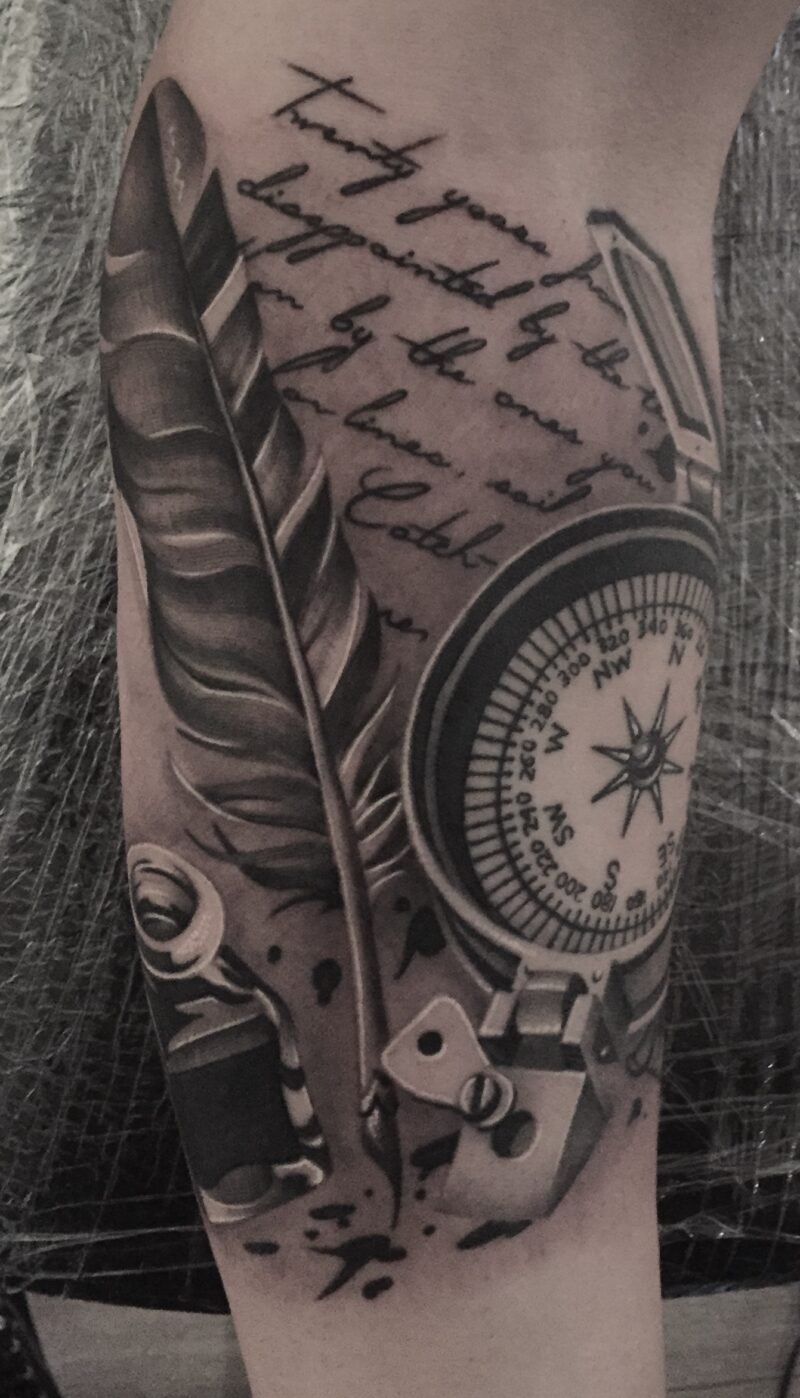
A compass and feather piece, the start of a sleeve. Photo: Leminem88, CC BY-SA 4.0, via Wikimedia Commons
An upper arm tattoo gives you a larger, rounder surface. The bicep and the outer shoulder are classic spots for bigger portraits, scenes and symbolic pieces, because the muscle provides a broad area to work across. A design here can be covered completely by a short sleeve, which keeps it private if you prefer.
It is worth thinking about how the skin moves. The upper arm changes shape when you flex or relax it, and over many years it will change with weight and muscle. Strong composition and clean shading usually cope with this better than very tight detail. Artists often suggest drawing the design directly onto your arm first so you can see how it moves before the needle comes near.
If you train regularly, the same principle applies. Our piece on Monica Granda’s latest gym progress is a good example of how much the upper body shape can change with training, which is something to keep in mind when you are planning a large piece for this area.
Sleeve and half sleeve tattoos
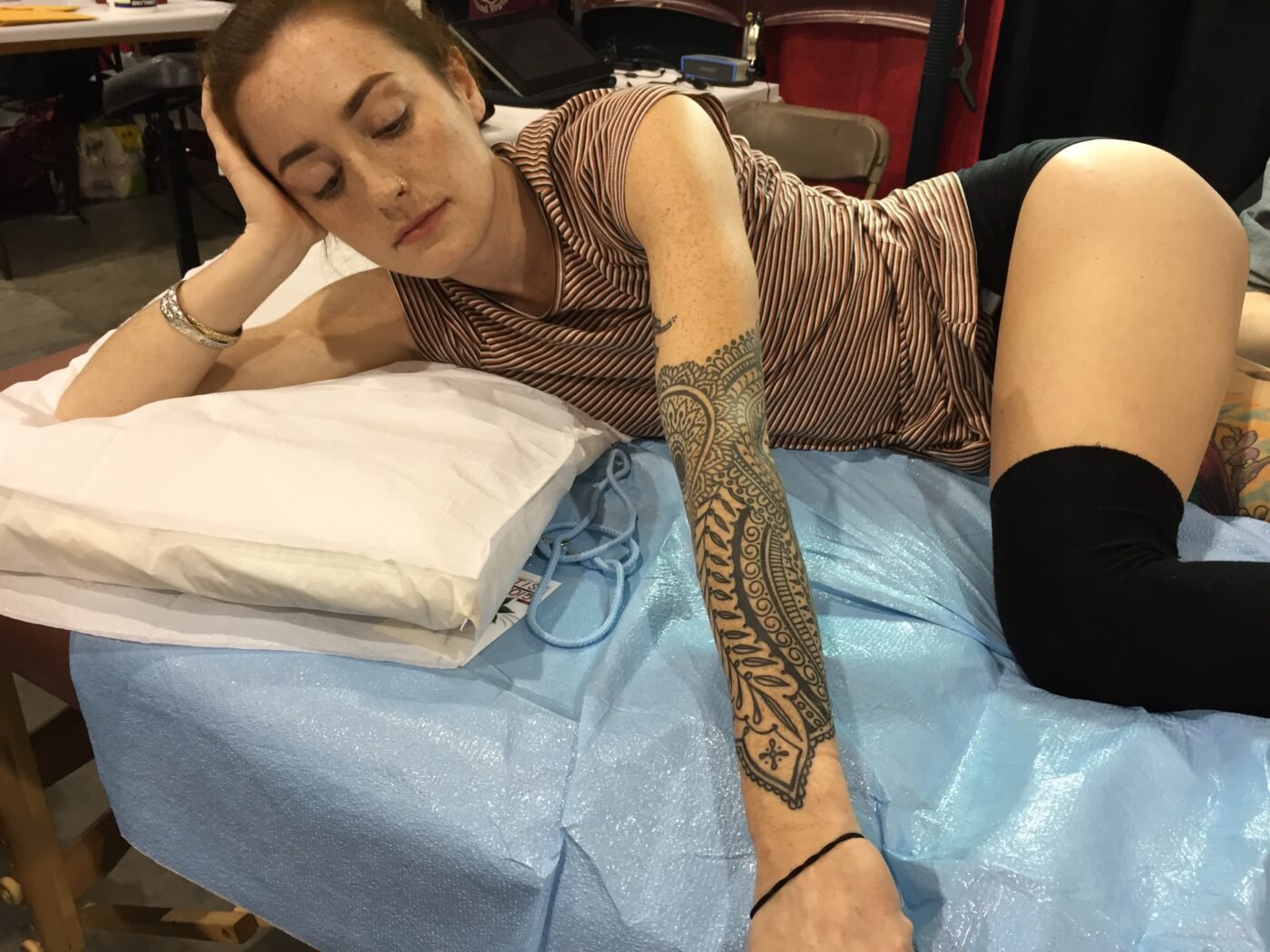
A full sleeve tattoo. Photo: Tony Alter, CC BY 2.0, via Wikimedia Commons
A sleeve tattoo covers most or all of the arm, usually from the shoulder to the wrist. A half sleeve stops at or near the elbow. Both are bigger commitments in time, money and planning, and they tend to be built up over several sessions rather than in one sitting.
The key to a good sleeve is flow. The best ones read as a single piece, with the elements leading naturally into one another, rather than as a patchwork of unrelated designs. Some people begin with one central image and let the rest grow around it. Others plan the entire arm from the start with a single artist, which tends to produce a more cohesive result. Either route is fine, but it helps to talk it through with the artist before the first session so everyone has the same picture in mind.
Themes that work well across a whole arm include nature scenes, mythology, traditional and neo-traditional styles, Japanese imagery, black and grey realism and abstract geometric work. Choose something that will still mean something to you in twenty years.
Choosing a style and an artist
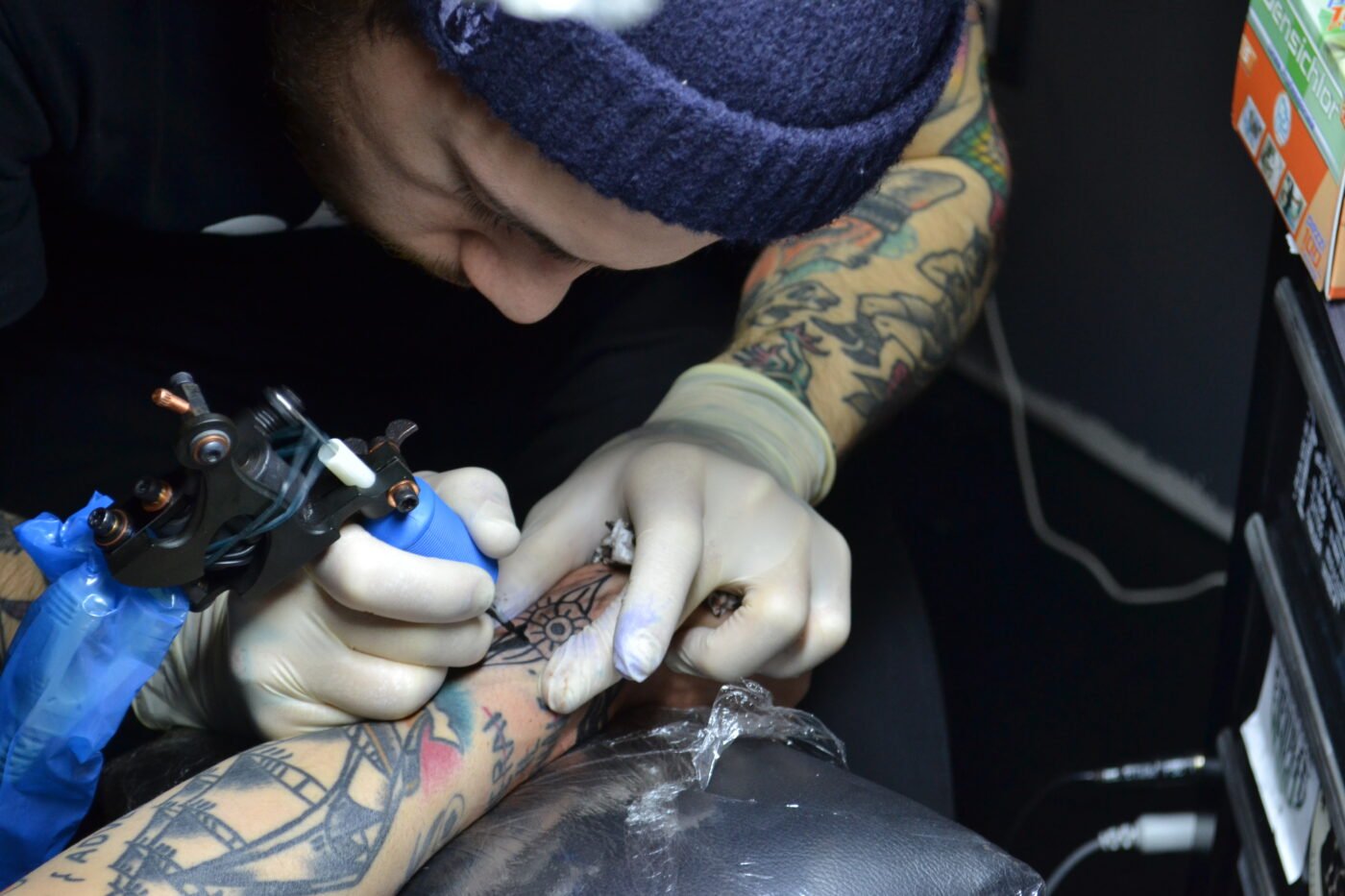
A tattoo artist at work. Photo: Technopop.tattoo, CC BY-SA 4.0, via Wikimedia Commons
Style matters at least as much as subject. Traditional work uses bold outlines and a limited colour palette. Black and grey realism relies on smooth shading. Fine line work looks delicate and clean but can soften over time. Blackwork uses solid areas of dark ink for contrast. Looking through an artist’s portfolio is the quickest way to judge whether they do the style you want, and whether healed photographs, not just fresh ones, show the work holding up.
Do not rush this stage. A good artist will be happy to talk through placement, size, cost and how many sessions the piece is likely to need. If a studio pressures you into booking on the spot, or will not show you examples of healed work, that is a good reason to look elsewhere. Booking a consultation first costs little and often saves a great deal of regret.
The law and safety basics in the UK
The law is clear on one point: under the Tattooing of Minors Act 1969, it is an offence to tattoo a person under the age of eighteen, except for medical reasons performed by or under the direction of a qualified medical practitioner. Reputable studios will ask for proof of age and will not make exceptions.
Safety is the other half of the picture. According to the UK government’s guidance on tattooing and body piercing infection prevention and control, tattoos carry health risks if not done properly, and the main concern is bloodborne viruses such as hepatitis B, hepatitis C and HIV. The same guidance notes that there are currently no legal requirements for professional competence and no nationally recognised, accredited training courses for tattooing. In practice that means the quality of the studio is something you need to check for yourself. Ask about hygiene practices, look for single-use needles and gloves, and check with your local council about how studios in your area are registered.
It is also sensible to be honest with your artist about skin conditions, allergies or medication, and to raise any concerns with a GP before booking if you are unsure whether a tattoo is suitable for you.
What to expect on the day
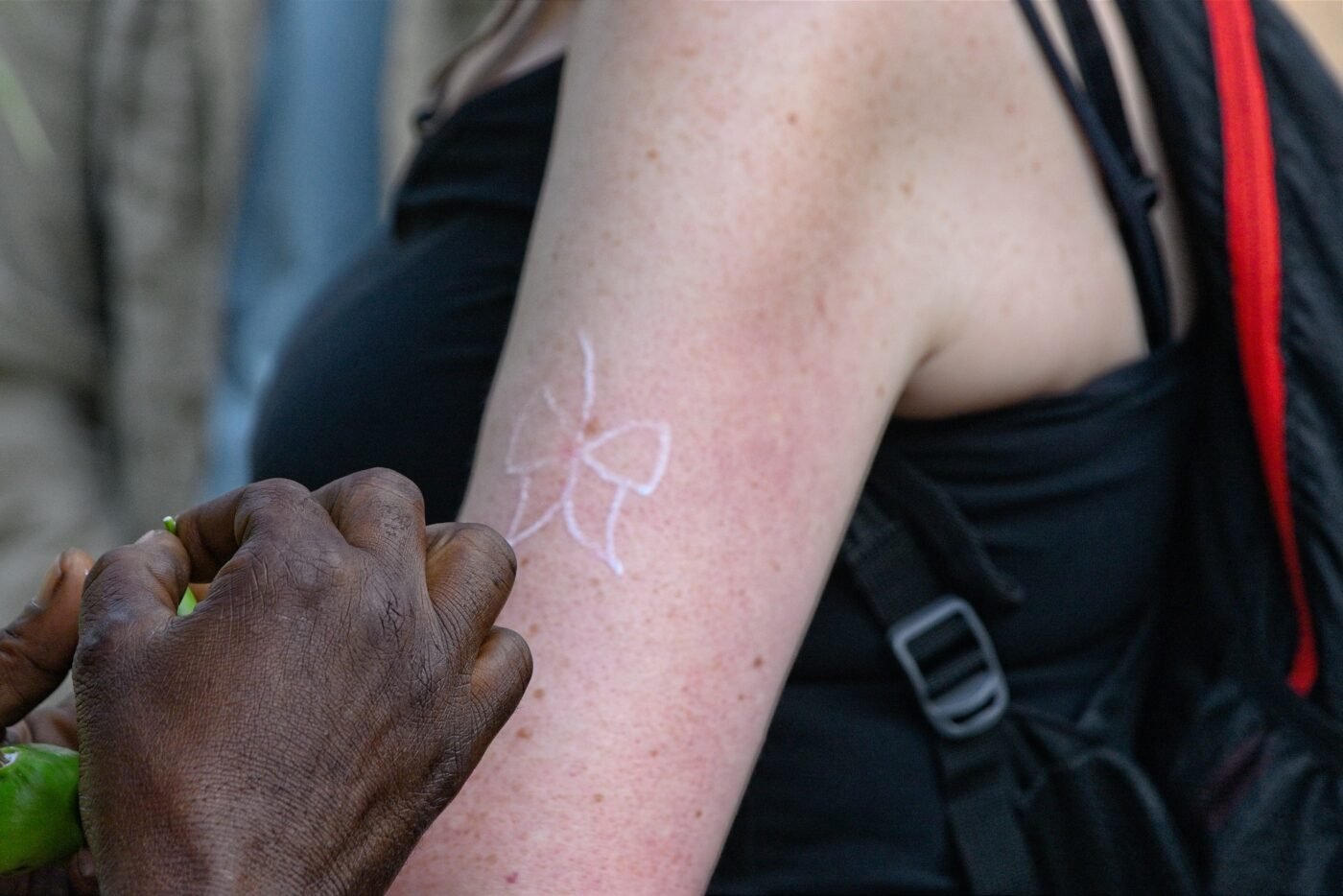
The start of a tattoo session. Photo: dave massie, CC BY 2.0, via Wikimedia Commons
Good preparation makes the session easier. Eat beforehand, drink water, wear clothes that give easy access to your arm and avoid heavy drinking the night before. Most artists will apply a stencil first so you can check the position and size. This is your moment to ask for a small adjustment, and a good artist will welcome it.
Sensation varies from person to person and from spot to spot. Many people find the fleshy outer upper arm more comfortable than areas near the elbow or inner arm, but there is no single rule, and your own experience may differ. Be realistic about how long you can sit still, and tell the artist if you need a break. A longer piece is often better split across two sessions than rushed.
Tattoo aftercare for your arm
Good aftercare protects both the design and your health. Council guidance such as the Braintree District Council tattoo aftercare leaflet recommends covering the area with non-stick gauze held by hypoallergenic tape, with larger tattoos sometimes wrapped in clean plastic film at first. Your artist should tell you when to remove it.
Wash your hands with warm water and liquid soap before touching the tattoo and dry them thoroughly. The same leaflet describes hand washing as the most effective way to prevent infection. Only use cream from a clean pot or tube, ideally bought from your practitioner or a pharmacist, and avoid antibiotic creams unless a doctor has advised them for an infection.
Some redness and tenderness are normal for the first week or so. Contact your artist or seek medical help if you notice swelling and redness that spreads, severe burning or throbbing, increasing pain when touched, or yellow or green discharge with a bad smell. Follow whatever specific instructions your artist gives you for washing, swimming and sun exposure, as these can vary with the type of work.
Long-term care and cover-ups
Once healed, sunlight is the biggest enemy of an arm tattoo, because the arm gets so much exposure. Using a high-factor sun cream on healed ink helps keep lines crisp and colours strong. Keeping your skin moisturised also helps the design look its best.
If your tastes change, there are options. Artists can sometimes rework or cover an older piece with a larger, darker design, and laser removal is available from specialist clinics. Both take planning and patience, so it is better to choose carefully the first time than to rely on fixing it later.
Final thoughts on getting a tattoo on your arm
A tattoo on arm men choose is a personal decision, and the best results come from taking your time. Choose a placement that fits your lifestyle, pick a style that will age well, find an artist whose healed work impresses you, and follow the aftercare advice carefully. Do those four things and your arm tattoo should give you pleasure for decades.