
A family of elephants tattoo is a way of putting the people closest to you on your skin without writing a single name. A large adult leading, smaller ones following, perhaps a calf holding on with its trunk: the picture reads instantly. It can stand for a parent and children, three generations of women, siblings, or someone who is no longer here. This guide covers what the design tends to mean, how real elephant families work, the layouts worth considering, where to put it, and the practical checks to make before you book.
What a family of elephants tattoo can mean
There is no official rulebook for tattoo symbolism, so the meaning is ultimately yours. That said, elephant tattoo meaning usually circles a few ideas: family loyalty, protection, patience, memory and strength that does not need to show off. A group of elephants adds togetherness to that list, because each figure can represent a particular person.
Many people assign the elephants by size and order. The one at the front might be a mum or grandparent, with children following from eldest to youngest. Others ignore birth order and give each animal a small detail instead, such as a flower for a birth month or a tiny date tucked into the ground line. A couple might choose two adults walking side by side with their children between them, while a single parent might want one large elephant sheltering two small ones. The design bends to fit the household, which is much of its appeal.
You will also see claims that the position of the trunk changes the message, with a raised trunk often linked to good luck. These associations come from particular traditions and popular belief rather than anything fixed. If it matters to you, choose accordingly. If it does not, pick the pose that looks best.
What real elephant families are like
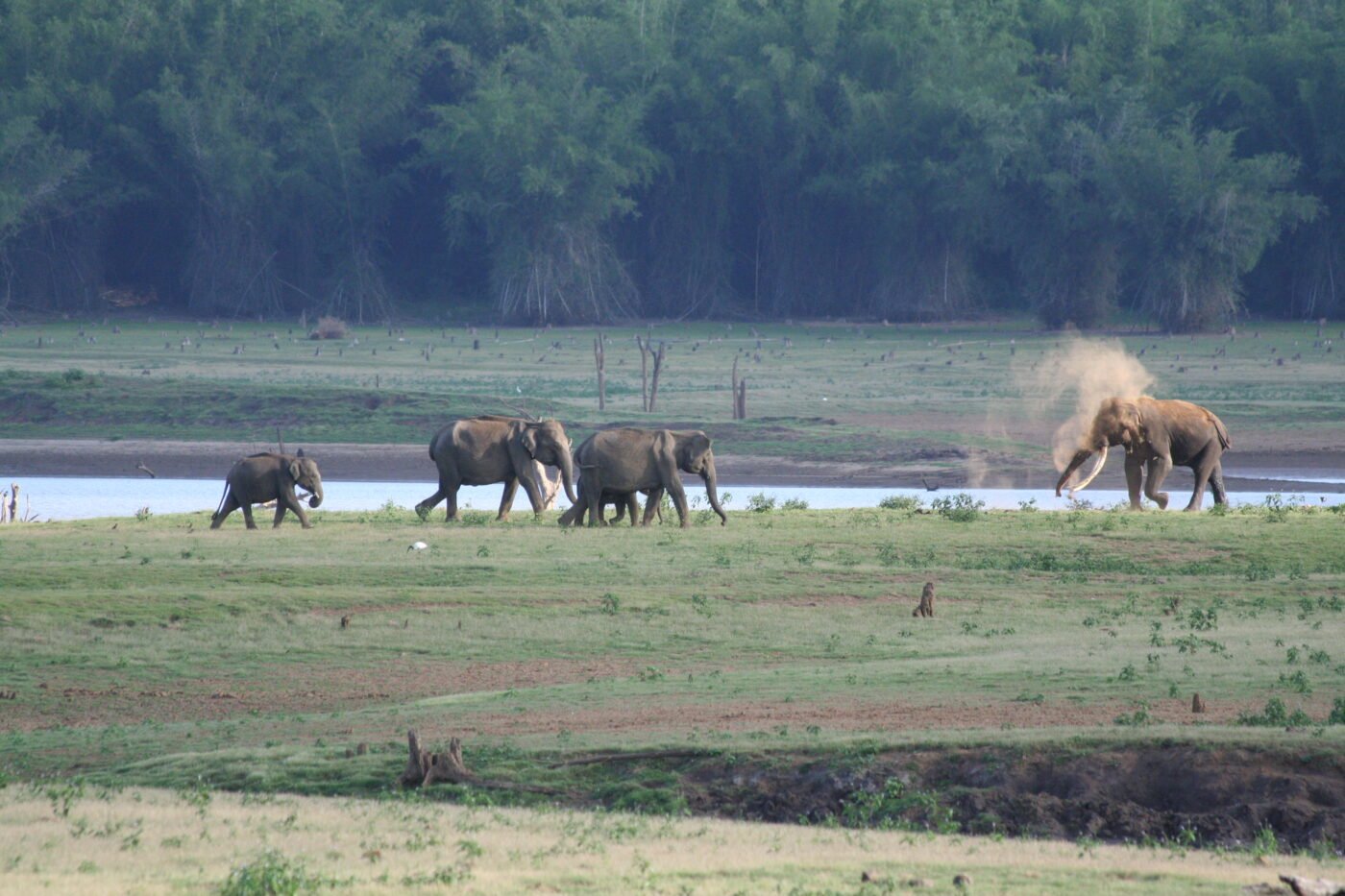
An elephant family on the Kabini River bank, India. Photo: Gnissah, CC BY-SA 3.0, via Wikimedia Commons, resized
Part of the reason the image works so well is that it has a basis in nature. Elephant families are built around related females and their young, led by a matriarch who is typically the oldest female. According to the PBS Nature series, which followed the family of an elephant called Echo, relatives work together to find food, defend one another and look after calves. The matriarch’s memory matters too, as an older female can recall where water was found during a drought many years earlier.
Adult males live differently. Young bulls eventually leave the family and go on to spend their time alone or in looser male groups. That is worth knowing if accuracy matters to you: a scene showing a big tusked male at the head of a family is a lovely picture of your own household, but it is not how a wild herd is usually arranged. Nobody is going to mark your tattoo for biology, yet some wearers like the idea that a matriarch-led line is true to life.
The animals themselves are also under pressure. In 2021 the International Union for Conservation of Nature listed the African savanna elephant as Endangered and the African forest elephant as Critically Endangered, citing poaching and habitat loss as major threats. For some people, that gives an elephant piece a second layer, as a nod to protecting families of every kind.
Elephant family tattoo design ideas
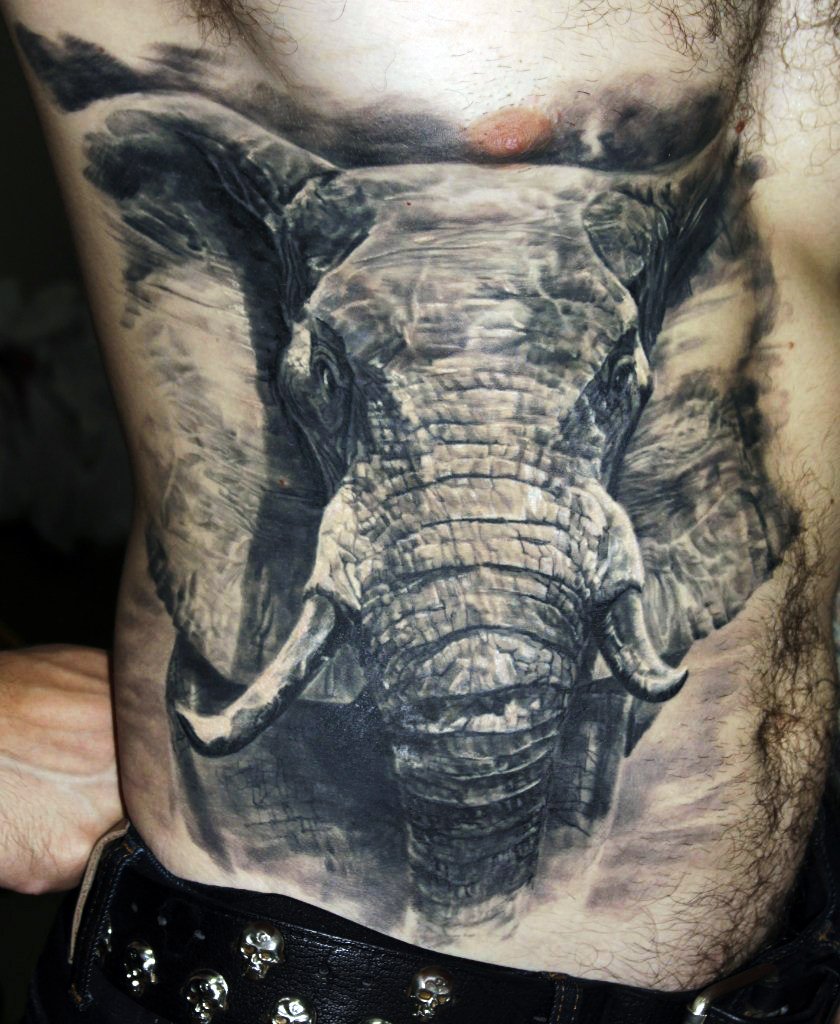
An example of an elephant tattoo. Photo: Anarchyvarius, CC BY-SA 3.0, via Wikimedia Commons
The trunk and tail line
This is the classic layout: elephants walking in single file, each holding the tail of the one in front with its trunk. It is clear, easy to personalise and can grow with you, since an artist may be able to add a new calf at the end later on. Ask for a little spare space if you think your family might expand.
Mother and baby elephant tattoo
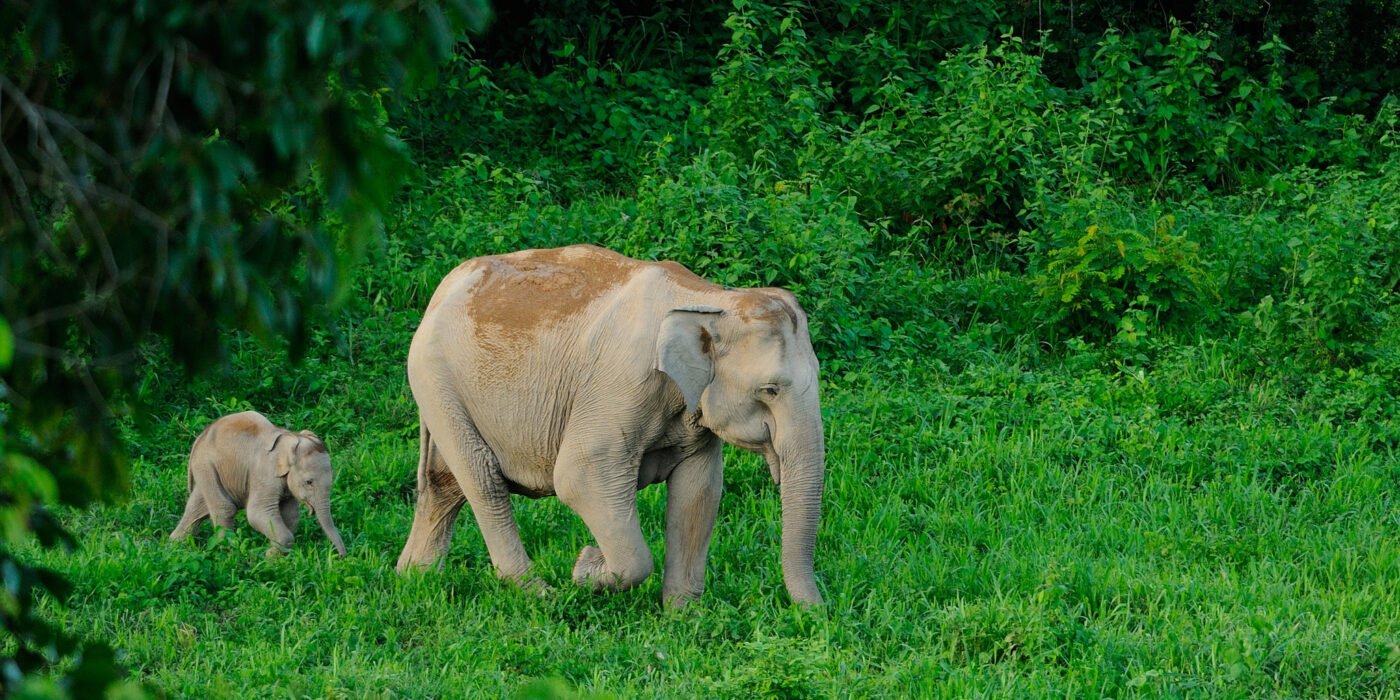
A mother and calf in Kui Buri National Park, Thailand, useful as a reference pose. Photo: Tontan Travel (tontantravel.com), CC BY-SA 2.0, via Wikimedia Commons, resized
A mother and baby elephant tattoo keeps things focused. The calf can stand beneath the adult’s head, lean into her leg or reach up with its trunk. It suits a first child, and it works just as well as a tribute from a grown child to a parent. A mum and daughter elephant tattoo, with each person wearing one half of the scene or a matching version, is a popular variation.
Trunks forming a heart
Two adults facing each other with their trunks curved into a heart, and one or more calves below, makes a neat, symmetrical design. It can look sweet in a small size, though the negative space inside the heart needs to be generous enough to stay readable as the skin ages.
Silhouettes and fine line work
Solid black silhouettes against a simple horizon are bold and legible from a distance. A fine line elephant tattoo is softer and more delicate, with outlines and very little shading. Fine detail can soften over the years, so avoid cramming five tiny animals into a space the size of a coin.
Realism and landscape scenes
Black and grey realism gives room for wrinkled skin, textured ears and expressive eyes, often set against a savanna sunset or an acacia tree. It needs a larger area and an artist who does this style regularly. Bring reference photographs and look at healed examples of their animal work, not just fresh pieces.
Geometric, floral and watercolour touches
Flowers can mark birth months, geometric frames can tie a group together, and watercolour washes can give each elephant its own colour. Add one idea rather than all three, so the family remains the thing people notice.
African or Asian elephants?
It helps to tell your artist which you want. African elephants have much larger ears, while Asian elephants have smaller ears and a more domed head. The trunk tip differs as well, with two finger-like points on African elephants and one on Asian elephants. If your family has a connection to a particular place, or your design draws on a religious or cultural tradition, check the details carefully. Imagery connected to faith, such as the Hindu deity Ganesha, carries its own significance and is worth researching with respect before it goes on your skin.
Where to place your tattoo
A horizontal line of elephants fits naturally along the forearm, across the upper back, over the collarbone or around the ankle. A mother and calf in a more upright composition can suit the upper arm, calf or shoulder blade. Large landscape pieces generally need the thigh, back or upper arm to breathe.
Think about how often you want to see it and who else should. A forearm piece is on show in a short sleeve, while a shoulder blade design stays private most of the time. If the arm appeals, our guide to tattoo on arm placement and styles goes through the forearm, upper arm and sleeves in more detail, and the points apply to anyone. For another example of tattoos being shown off on camera, there is also our look at Mily Moon showing off her new tattoos.
Making it personal
Small choices turn a stock image into your own. You could match the number of elephants to your household, give the matriarch a feature that reminds you of someone, or include coordinates, initials or a short word in a relative’s handwriting. For a memorial tattoo, one elephant might be drawn in outline only, walking slightly apart or looking back.
Language can add something too. If your family is Spanish-speaking, a single word beneath the design could be enough, and our piece on how to say dad in Spanish explains the differences between papá, padre and papi. Whatever the language, have a fluent speaker check the spelling and accents before the stencil goes on.
If several relatives are getting matching pieces, agree on the essentials first: the style, the rough size and which elements everyone shares. Each person can still choose their own placement.
Before you book: age, hygiene and aftercare
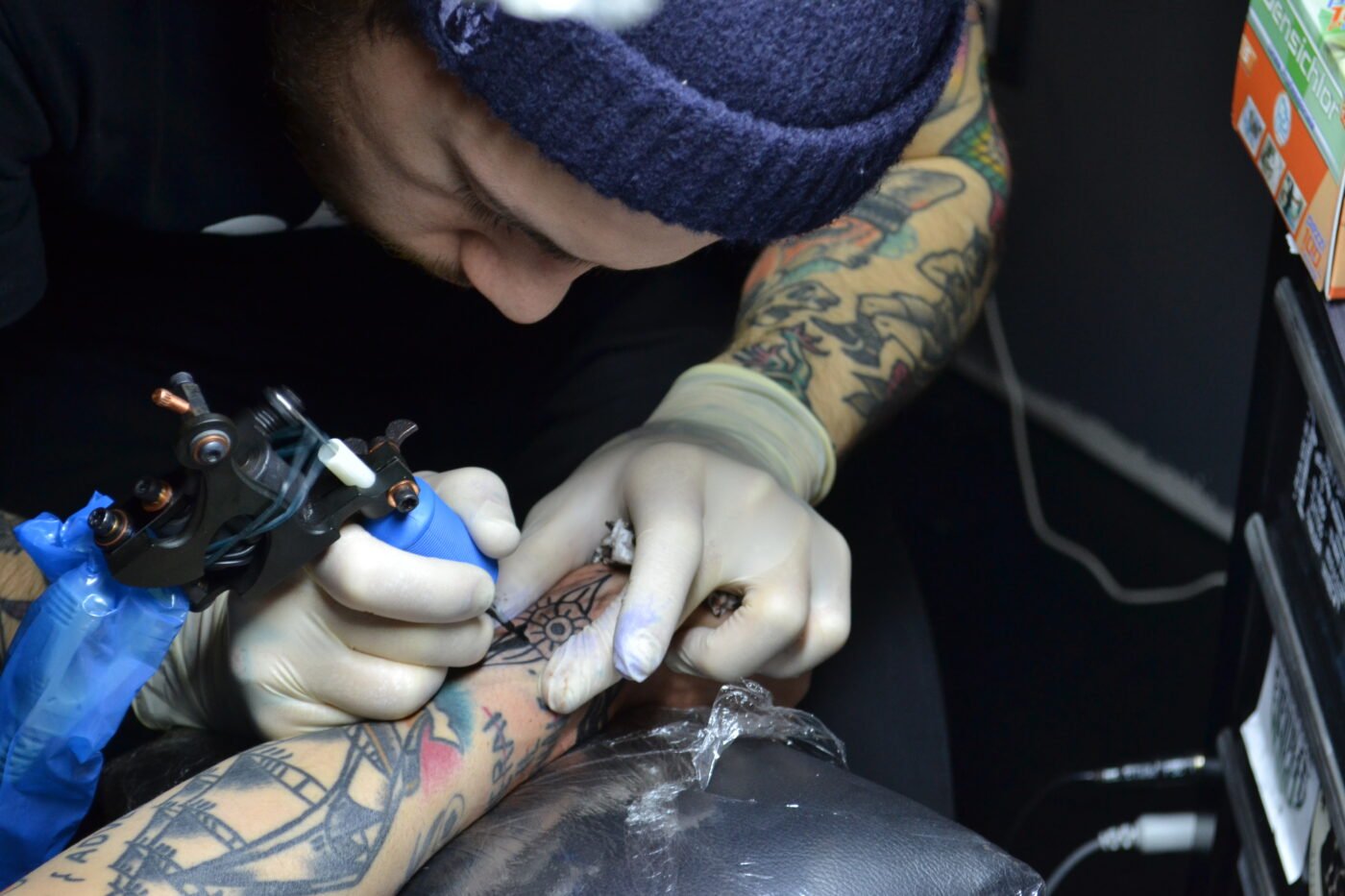
A tattoo artist at work. Photo: Technopop.tattoo, CC BY-SA 4.0, via Wikimedia Commons
In the UK it is against the law to tattoo anyone under 18, and parental consent does not change that. In England, tattooists and their premises need to be registered with the local council, so ask to see the certificate or check with the council directly.
Registration is not the same as a qualification. UK Health Security Agency guidance notes that there are no legal requirements for professional competence, and that poorly done tattoos carry a risk of infection, including bloodborne viruses such as hepatitis B, hepatitis C and HIV. Look for a clean studio, new single-use needles and an artist who is happy to answer questions. If you have a skin condition, allergy or other health concern, speak to a GP or pharmacist beforehand.
Afterwards, follow your tattooist’s aftercare instructions, wash your hands before touching the area and resist picking at it. Seek medical advice if you notice signs of infection, such as spreading redness, swelling, worsening pain or discharge. Once it has healed, protecting the ink from strong sun will help the lines stay clear.
Final thoughts
The best family of elephants tattoo is one that means something specific to you. Decide who the elephants are, choose a style that will stay readable at the size you want, and find an artist whose healed work you like. Take the sketch away and live with it for a few weeks. If it still makes you think of your people every time you look at it, you are probably ready to book.