

Knowing how to say dad in Spanish sounds like a one-word job, and for a basic answer it is: papá. But anyone who has listened to Spanish speakers talk about their fathers will have noticed a whole family of words in play, from the neutral papá to the formal padre and the affectionate papi. Which one you choose depends on who you are talking to, where they live and how close you are. This guide sets out the main words for dad in Spanish, how they differ between Spain and Latin America, and a few pronunciation and grammar points that trip up learners.
Dad in Spanish: the two core words, papá and padre
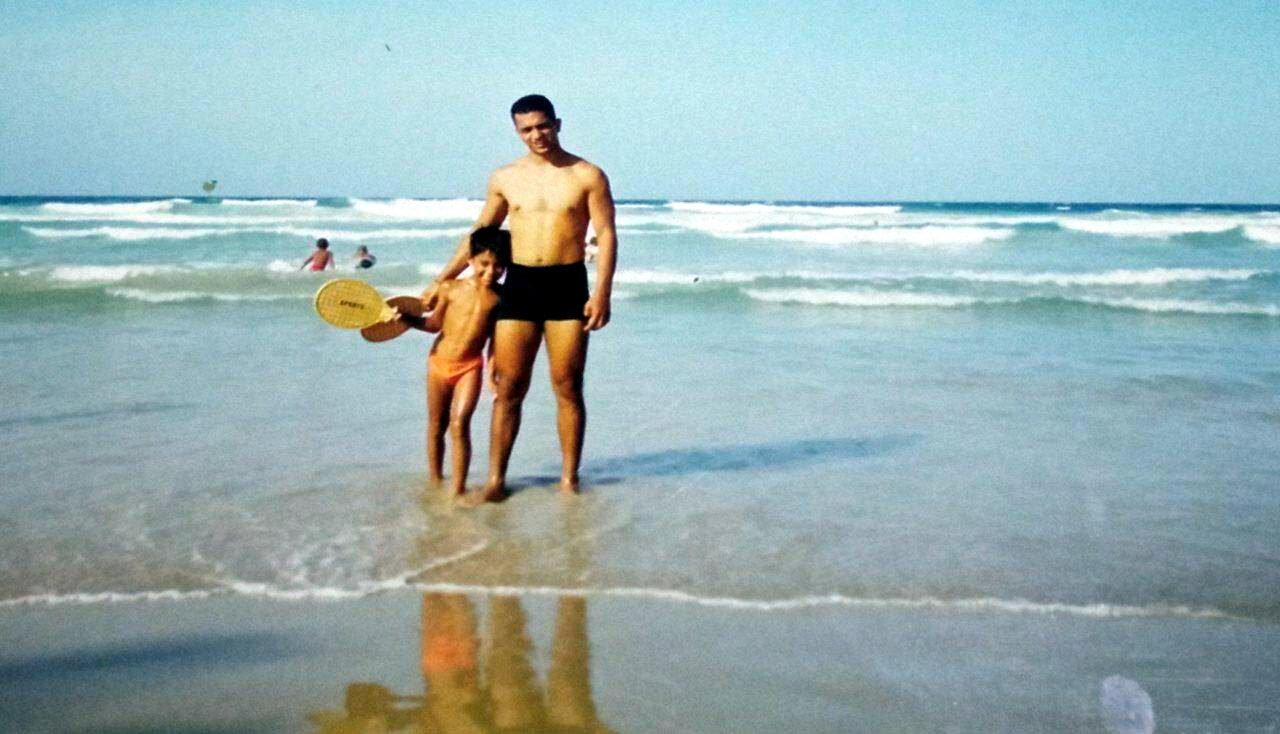
Father and son on a beach in Venezuela. Photo: Sebastián Arena, CC BY-SA 4.0, via Wikimedia Commons
The two everyday answers are papá and padre. Both can be used when talking about your father, and they are often interchangeable in that situation. The difference is mostly one of tone and habit.
Papá is the most common word for dad in Spanish. According to SpanishDict, it is used both when speaking to your dad and when speaking about him, and it is neutral in tone. It is used more widely in Latin America than in Spain, although it is perfectly normal in both. A simple example would be “Te extraño, papá”, meaning “I miss you, Dad”.
Padre is literally “father”. It is the more formal option and is more common in Spain. People say “mi padre trabaja mucho” (my father works a lot) without sounding stiff, but addressing your dad directly as padre is unusual today. If you are writing a formal letter, filling in a form or talking about someone else’s father in a polite setting, padre is the safer choice.
One small point of spelling is worth knowing early. Unlike English, Spanish does not capitalise papá mid-sentence when it is used as a title or name, so you will see it written in lower case unless it starts a sentence.
What the Real Academia Española says about papá
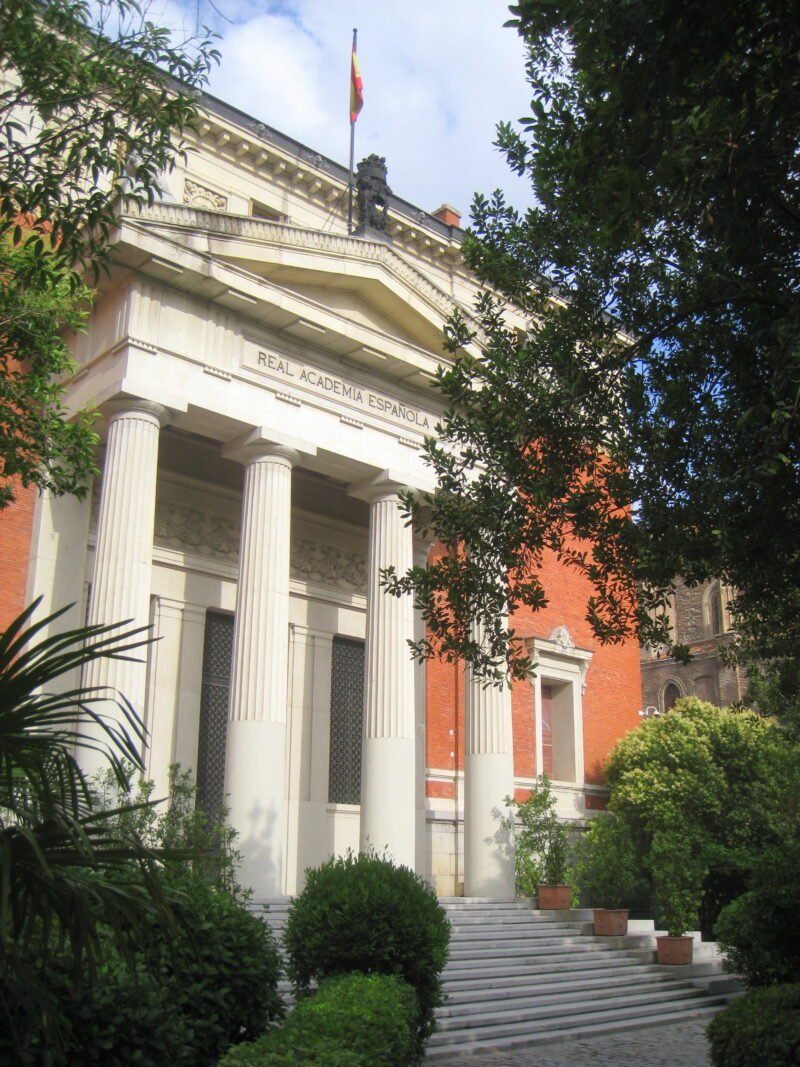
The Real Academia Española in Madrid. Photo: Daderot, public domain, via Wikimedia Commons
If you want an authority on the word, the Real Academia Española (RAE) covers it in its Diccionario panhispánico de dudas. It traces papá back to the Latin papa, which was stressed on the first syllable in Spanish until the 18th century. French influence then made the stressed-final form papá standard in cultured speech in both Spain and Latin America. The older form papa survives in popular and rural speech.
The RAE also makes a useful point about who says what. In Spain, papá is normal when addressing your own father, when referring to him within the family, in speech between young children, or when an adult talks to a small child. Among adults outside the family, padre is preferred. In Latin America, adults commonly use papá to refer to their father even outside the immediate family.
The plural is papás, and the RAE states that papases is incorrect. That is a handy detail, because papás can mean “dads” or, in everyday speech, “mum and dad”, just as padres can mean “parents”.
Informal and affectionate ways to say dad in Spanish
Beyond the two core words, Spanish has plenty of affectionate options. They are worth learning because you will hear them constantly in films, songs and family conversation.
- Papi is informal and used throughout the Spanish-speaking world. It is the closest equivalent to “daddy”.
- Papito is another informal, diminutive form. The RAE describes it as widespread in Latin America.
- Papaíto is the most common diminutive in Spain, according to the RAE.
- Papacito is also correct and is the most frequent diminutive in Mexico, as noted by the RAE.
- Apá is an informal form heard in Mexico and Central America.
- Pai is informal and used in the Dominican Republic and Puerto Rico.
- Tata is informal and used in parts of Latin America, though in some Latin American countries it means “grandpa”, so context matters.
A word of caution on papi and its cousins. In some contexts, especially in music and slang, papi and papacito are also used as flirtatious terms for an attractive man. Between a child and a parent it is entirely innocent, but in other situations it can mean something quite different, so listen to how native speakers use it before you try it out in public.
Spain versus Latin America: which word for dad should you use?
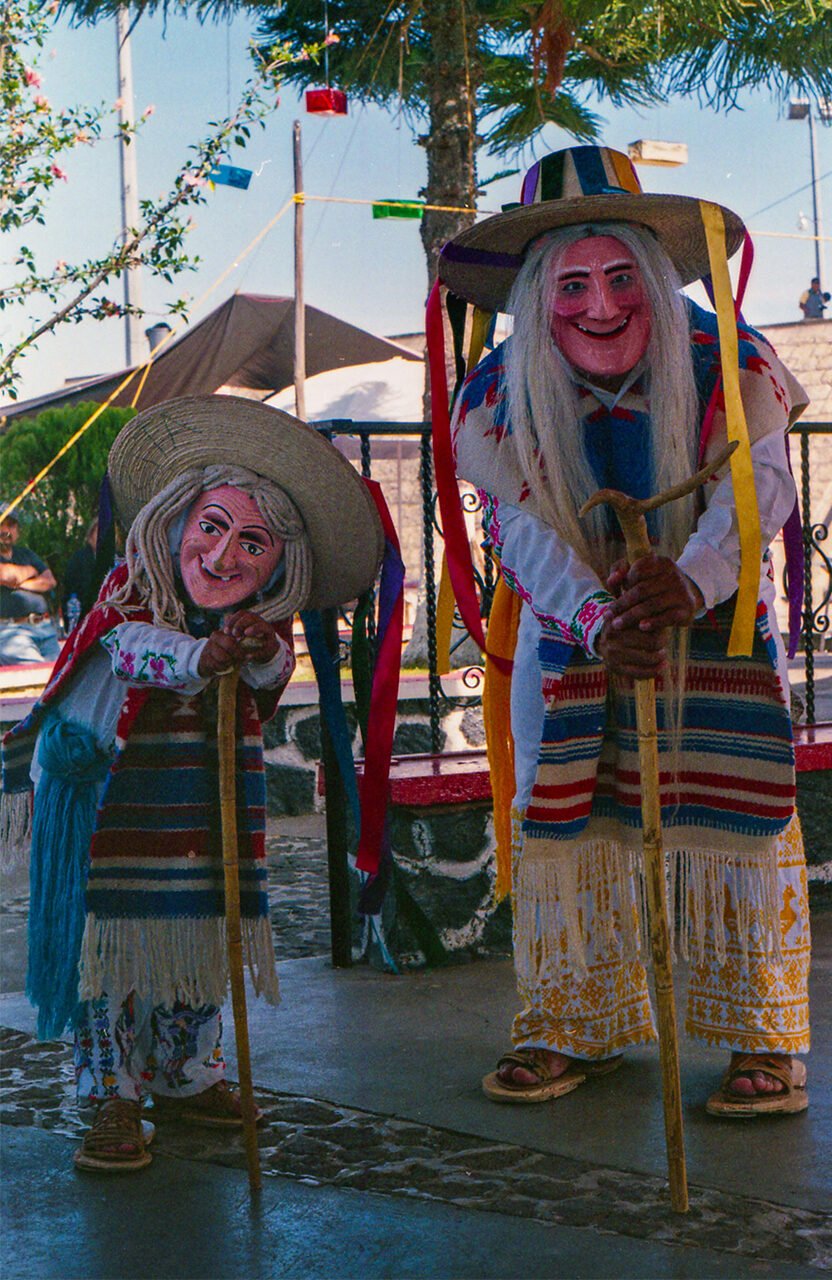
Father and son performing the Danza de los Viejitos in Janitzio, Mexico. Photo: Sergio Vásquez García, CC BY-SA 4.0, via Wikimedia Commons
Regional habits are the main reason there is no single correct answer. As a rough guide, learners can use papá almost anywhere and be understood and accepted. If you want to sound a little more local, there are a few pointers.
In Spain, padre is more common than in Latin America when speaking about your father, and papaíto turns up as the usual affectionate diminutive. In Mexico, papacito and apá are both heard. In the Caribbean, pai is common in the Dominican Republic and Puerto Rico. Across the wider Spanish-speaking world, papi is the one word that travels well.
The simplest rule is to follow the person you are speaking to. If a friend refers to their father as mi papá, do the same. If they use a local nickname, you do not need to copy it, but it helps to recognise it.
Pronunciation tips for papá and padre
Pronunciation is where many learners slip. The accent on papá is not decoration: it marks the stress on the final syllable, so you say “pa-PAH”, not “PA-pa”. This matters because papa without the accent is a different word in many places, so the stress and spelling help keep the meaning clear.
Spanish vowels are short and clean. The “a” in both syllables sounds like the “a” in “father” rather than the flatter “a” in “cat”. For padre, the “d” between vowels is soft, closer to the “th” in “this” than to a hard English “d”. Practising short phrases out loud, such as “mi papá” and “mi padre”, is more useful than repeating single words.
Useful phrases using dad in Spanish
Father and son at Nahuel Huapi lake, Argentina. Photo: emiliokuffer, CC BY-SA 2.0, via Wikimedia Commons
Once you have the words, a few ready-made phrases make them stick. “Mi papá” means “my dad”, and “mi padre” means “my father”. “Mis papás” is a natural way to say “my parents” in much of Latin America. “El padre de Ana” means “Ana’s father”, and “su papá” means “his, her or their dad”, depending on context. For Father’s Day, which is called el Día del Padre, a short message such as “Feliz Día del Padre, papá” works well, although the date varies from country to country, so check the local calendar before you send a card.
Learning Spanish family words through film and TV
Family vocabulary sticks best when you hear it in context. Dramas and comedies are full of parents and children speaking naturally, which makes them a good way to pick up how papá, papi and padre are used in real conversation. If you are looking for somewhere to start, our guide to the best Spanish dubbed shows on Netflix is a good place to find series to listen to. The same approach works for other languages too, as shown in our list of Czech dubbed crime shows on Netflix, which is aimed partly at people learning the language through dubbing.
Social media can help as well, because captions often show everyday Spanish. For example, our post on Spanish fitness influencer Bulkykrispis mentions that her caption was written in Spanish, which is the kind of casual, real-world text you can try to read once you know the basics.
Common mistakes when saying dad in Spanish
A few errors come up again and again. The first is forgetting the accent on papá or stressing the wrong syllable. The second is using padre in direct address, which can sound oddly formal or even like speaking to a priest, since padre is also used for a religious father. The third is making the plural papases, which the RAE says is incorrect. The correct plural is papás. The fourth is treating all the affectionate forms as identical, when some, like tata, can mean something else in a different country.
Quick summary: how to say dad in Spanish
For most situations, papá is the word to use. Choose padre when you want to be formal or when you are talking about a father in a more official context. Use papi or the local diminutive for an affectionate, informal feel, and pay attention to regional variations such as apá in Mexico and Central America or pai in the Dominican Republic and Puerto Rico. If you want to check the details, the RAE’s entry on papá in the Diccionario panhispánico de dudas is the definitive reference, and the guide to how to refer to your dad in Spanish from SpanishDict gives a helpful regional overview.